Trump Extends Narrowed Waiver of USA Jones Act
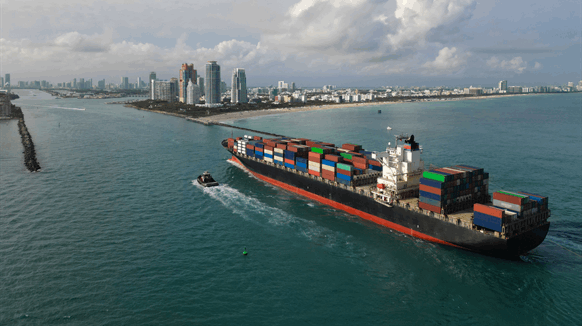
President Donald Trump has extended a waiver allowing foreign ships to transport oil and other commodities around the US for 90 more days, albeit with new limits, as the war in Iran disrupts crude flows and hikes fuel costs.
Trump narrowed the scope of relief from the Jones Act, requiring case-by-case reviews of individual voyages after pleas from shipbuilders and their allies on Capitol Hill who argue the policy hurts the domestic industry.
The move, which was finalized Monday, was described by a White House official who asked for anonymity because it has not yet been publicly announced.
The Pentagon going forward must consult with the US Maritime Administration on the availability of US-flagged, -owned and -operated vessels generally required by federal law before deciding whether the waiver will apply to individual voyages.
The extended waiver is also focused more squarely on the movement of energy. It will apply to vessels carrying a much smaller assortment of commodities than the original policy, including gasoline, jet fuel, crude oil, naphtha, liquefied natural gas, soy oil and fertilizers.
The extension maintains relief from requirements of the Jones Act, a 1920 law that forces goods carried between domestic coastal ports to be transported on US ships. Trump’s extension comes just days before a scheduled Aug. 16 expiration of the current waiver.
The narrower scope of commodities covered by Trump’s extended waiver largely reflects the bulk of the goods for which the relief was already being used this year. However, the case-by-case reviews mark a pivot, mirroring some of the scrutiny that has accompanied individual waivers in recent years.
Trump’s Jones Act exemption was already historic in nature — having applied to hundreds of goods since he first authorized it in mid-March.
While presidents have mostly lifted Jones Act mandates for individual voyages and short periods in the wake of hurricanes and pipeline outages that disrupted fuel flows, Trump’s initial waiver had applied far more broadly amid the Middle East conflict he started alongside Israel in February.
The decision underscores the administration’s continued concerns about how the war is rattling oil markets and driving up energy costs ahead of November midterm elections that are poised to be a litmus test for the president’s stewardship of the US economy.
Trump praised a retreat in prices after a short-lived US-Iran ceasefire and acknowledged he was motivated to sign the pact in part to forestall an “economic catastrophe” and avoid comparisons to Herbert Hoover, who was president when the 1929 stock market crash helped spark the Great Depression.
A renewed fight between Tehran and Washington over the Strait of Hormuz is keeping millions of barrels of oil from reaching markets daily, boosting costs as countries tap stored inventories and companies scramble for new supplies.
Trump’s waiver decisions have been cheered by oil industry stakeholders, who say they’ve helped unlock flows of American crude and fuel to regions typically reliant on imported supplies carried on foreign tankers. Administration officials have described the relief as helping prevent supply chain shortages and keeping a lid on costs.
The extension is meant to “ensure our military and key industries maintain uninterrupted access to critical resources,” said White House spokeswoman Taylor Rogers. “Data shows the waiver has driven a significant increase in domestic deliveries of essential products such as gasoline, diesel, and jet fuel.”
The waiver, however, have provoked alarm from shipbuilders and their supporters in Congress, who’ve warned the exemptions are undercutting the Jones Act. The law was enacted after World War I to bolster America’s maritime capacity and its commercial shipping — and the statute’s defenders say it’s still essential to supporting the industry today.
Dozens of House Republicans, including Speaker Mike Johnson and Majority Leader Steve Scalise, had appealed to Trump to stop waiving the Jones Act. Both men represent Louisiana, a major US shipping hub.
And while current and former Trump officials have described Trump as an ardent critic of the law, it has defenders inside the White House, including trade adviser Peter Navarro.
So far, the waiver has been used by scores of ships for more than 230 coastal transits, according to US government data. That’s included a surge of otherwise-rare shipments from the US Gulf Coast to the West Coast, as well as deliveries of American liquefied petroleum gas to Puerto Rico.


WHAT DO YOU THINK?
Generated by readers, the comments included herein do not reflect the views and opinions of Rigzone. All comments are subject to editorial review. Off-topic, inappropriate or insulting comments will be removed.